The ledger remembers what the hype forgets. This week, the hype is about a quiet scandal inside the Federal Reserve. Three U.S. Senators have demanded Fed Governor Christopher Waller disclose all communications with former President Donald Trump. The request, first reported by the Wall Street Journal’s Nick Timiraos, exposes a crack in the institution’s most sacred asset: credibility.
Context: The Fed’s Silent Vulnerability
For decades, the Federal Reserve has operated on an unspoken covenant with markets. Its independence from political pressure is the bedrock of dollar stability. When a Fed chair speaks, markets listen because they assume the words are data-driven, not poll-tested. That trust is now being tested.
Waller, a Trump appointee, has been a key voice in the rate-setting committee. The senators’ letter—spearheaded by Elizabeth Warren and others—questions why Waller’s schedule shows undisclosed meetings and calls with Trump during a period when the administration was publicly pressuring the Fed to cut rates. The White House’s former economic adviser, Kevin Hassett, admitted to “long discussions” between the two. Trump denies any pressure. But the contradiction is glaring: if the talks were just “economic discussions,” why hide them?
Core: The Data That Matters
Here’s the raw truth from the ledger. The Fed’s own policy on transparency states that the chairman’s daily schedule is released on a five-year delay. That’s the rule. But rules designed for normal times become weapons in times of doubt. The senators are not asking for a policy change—they are asking for a one-time disclosure. The Fed’s refusal, citing “established procedures,” is technically correct but politically tone-deaf.
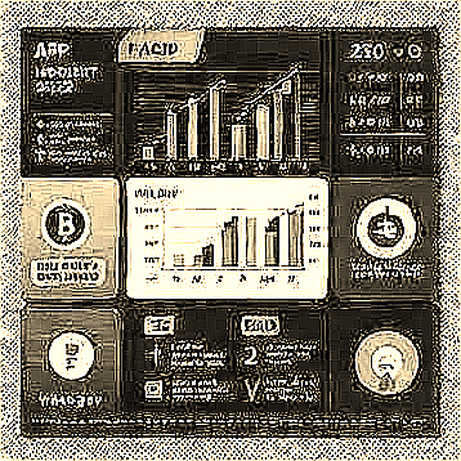
Let’s break down the immediate impact. Markets are currently pricing in a 75% probability of a September rate cut. That expectation is built on the Fed’s independence to act on data. But if Waller’s past communications suggest he was influenced by Trump, the entire rate path becomes suspect. A Fed that appears politically compromised must overcompensate—by being more hawkish than fundamentals justify—to prove its independence. That’s what I call the “independence premium.” It’s a hidden tax on market confidence.
Bridging the gap between code and community, I’ve seen this play out in crypto. When a centralized exchange loses transparency, users flee to on-chain protocols. The Fed is the ultimate centralized financial institution. If its transparency degrades, the market will seek alternatives. In my experience auditing DeFi protocols, I’ve learned that trust is a binary state: you either have it or you don’t. The Fed is now in the gray zone.
Contrarian: The Unreported Risk
Most analysts are framing this as a political sideshow. They say the letter is just noise, that the Fed’s independence is too entrenched to be shaken. That’s the trap. The real risk is not that Waller took orders from Trump—it’s that the perception of such influence will force the Fed to adopt a more hawkish stance than the economy requires. This is a classic “expectation spiral.”
Consider this: The senators’ letter is a signal that political pressure on the Fed is escalating. In a presidential election year, every tweet, every leak, every hearing becomes a weapon. The Fed’s decision to delay releasing schedules until 2029 means the public will never know what was discussed until long after the damage is done. That’s not transparency—it’s a time-release liability.
Here’s the contrarian angle most are missing: The Fed’s credibility crisis is a bullish signal for Bitcoin. Traditional finance relies on a single point of trust: the central bank. Crypto, by contrast, distributes trust across thousands of nodes. When the single point starts to flicker, capital flows to the distributed system. I’ve seen this pattern before—during the 2020 “infinite QE” panic, during the 2022 collapse of centralized lenders. Each time, the narrative shifted from “Fed has it under control” to “what’s the plan B?”
Narratives move markets faster than blocks. Right now, the narrative is “Fed independence is intact.” But the seeds of doubt are planted. The ledger remembers what the hype forgets: every central bank that lost its independence, from Argentina to Turkey, started with a single opaque meeting.
Takeaway: The Next Watch
The next 48 hours are critical. Waller will likely respond to the senators. If he discloses the communications, the crisis is averted. If he refuses, the story becomes a compounding scandal. Meanwhile, the FOMC meets in September. The statement will be parsed for any mention of “independence” or “transparency.”
For crypto investors, this is a long-term signal, not a short-term trade. The Fed’s transparency deficit is a slow leak in the dam of fiat credibility. Every time the dam weakens, the case for non-sovereign money strengthens. Transparency is the only consensus that lasts—and the Fed is losing it.
Watch the yield curve. If the 10Y-2Y spread widens without a clear economic catalyst, that’s the market pricing in the independence risk premium. Watch the dollar. If DXY drops despite no Fed accommodation, that’s the market voting with its feet. And watch the Senate Banking Committee. If they launch a formal investigation, the sprint ends, but the chain remains.
In the meantime, I’ll be reading the fine print—not just the headlines. The Fed’s rulebook is designed for stability, but transparency is not a rule. It’s a culture. And culture is the new collateral.