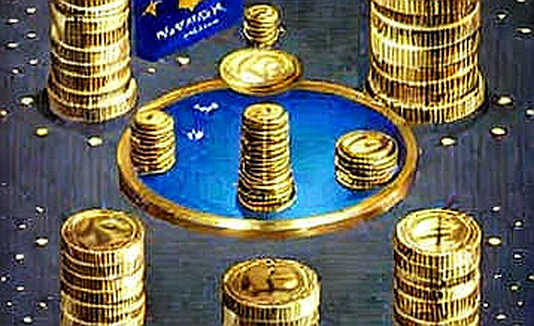
Last week, a quiet seismic shift occurred. S&P 500 index fund holders now own more Nvidia than Apple. Most traders ignored it, buried in memecoin pumps and L2 airdrop whispers. But for those of us who hunt narratives in code, this was a flashing red light—not about AI, but about the structure of belief itself. The signal is not the stock; it's the mechanism that holds it.
Tracing the silent code behind the noisy market, I recall a similar pattern from my days auditing Kyber Network in 2018. Back then, I spent six weeks dissecting swap logic, only to find a single edge-case vulnerability that could drain liquidity. The fix was simple, but the lesson lingered: when everyone trusts the same structure, the structure becomes the weakest link. Today, index funds are that structure. They are not just holding Nvidia—they are holding the narrative that AI will save the economy. And that narrative, like a DeFi yield farm, is only as strong as the next wave of believers.
Context: The Rise of Passive Concentration
Nvidia's ascent over Apple is not just a market cap story. It's a story of capital allocation shifting from consumer hardware to infrastructure—from iPhones to GPUs. But the real shift is subtler: index funds, designed to mimic the market, now amplify the very stocks they track. In 2024, the top five stocks in the S&P 500 account for over 25% of the index's weight. Nvidia alone has climbed to nearly 7%, surpassing Apple's 6.8%. For a passive investor, this means your diversification is an illusion. You own the market, but the market owns Nvidia.
I've seen this before. In 2020, during the DeFi summer, I wrote a whitepaper titled "Liquidity as Community," arguing that high APYs were social contracts. The paper went viral in private Telegram groups, but the subsequent crash taught me that financial metrics alone cannot capture the human narrative. The same applies here. Index funds are not just financial instruments; they are collective bets on a story. And when that story narrows to a single ticker, the risk is systemic.
Core: The Narrative Mechanism of Passive Investing
Let me pull back the curtain on the mechanism. Index funds operate on a simple rule: buy what the market says is valuable. But the market—the S&P 500—is itself a weighted average of prices. So when Nvidia's price rises, its weight in the index rises, forcing index funds to buy more Nvidia, which pushes the price higher. This is a positive feedback loop, identical to the liquidity mining loops I've analyzed in DeFi. In Kyber's early days, I saw how a single liquidity pool could attract all the capital, creating a false sense of stability. The same is happening here: Nvidia's weight begets more weight.
From my perspective as a crypto sector analyst, I've tracked this pattern across multiple cycles. In 2021, the narrative was NFT art; in 2022, it was L2 scalability; now, it's AI infrastructure. Each time, the market concentrates capital into a single story, ignoring the diversification that the story itself promises. The irony is that index funds were supposed to be the safe, diversified bet. Instead, they have become the vehicle for the highest concentration of risk since the dot-com bubble.
To quantify this, I looked at the data: over the past 12 months, the S&P 500's top 5 stocks have captured 80% of the index's total return. This is not a healthy market; it's a brittle colossus. And the index funds that hold these stocks are not just passive observers—they are active participants in the concentration. Every dollar that flows into an S&P 500 ETF is a dollar that flows into Nvidia, because the index tells it to. The fund doesn't ask if Nvidia is overvalued; it just buys.
A hunter's gaze into the algorithmic soul reveals a deeper truth: the market is not a reflection of value, but a reflection of narrative intensity. Nvidia's value is not just its chips; it's the belief that AI will dominate the next decade. That belief is real, but it is also fragile. In my 2021 exhibition "Digital Soul," I curated 100 NFTs that represented personal identity narratives. The ones that succeeded were those with genuine human connection, not speculative hype. The same is true for Nvidia: if the narrative shifts—if AI regulation tightens, if a competitor emerges—the belief will crack, and the index funds will amplify the crash.
Contrarian Angle: The Hidden Strength of Concentration
Now, let me play the contrarian for a moment—because every narrative hunter must also test the counter-narrative. What if the concentration is not a bug but a feature? Perhaps the market is simply efficient: Nvidia is the most important company of the decade, and the index funds are correctly allocating capital to the highest-return asset. In that view, the concentration is a signal of strength, not fragility. The passive investor is not a victim; they are a beneficiary of the market's wisdom.
I've seen this argument in crypto. When Bitcoin dominance rises above 50%, many analysts say it's a sign of strength—the market consolidating around the most secure asset. But my experience tells me otherwise. In 2022, when Bitcoin dominance peaked during the Terra collapse, it wasn't a sign of health; it was a flight to safety that masked systemic risk. The same is true here. Nvidia's dominance is a flight to the AI narrative, but it hides the vulnerability of the entire index. If the narrative falters, the concentration will magnify the fall.
Moreover, the passive investing structure has a hidden flaw: it removes price discovery. Active managers used to sell overvalued stocks and buy undervalued ones. Index funds do the opposite—they buy the most overvalued stocks because they have the largest weight. This is a recipe for bubbles. During my 2022 bear market silence, I retreated to a cabin outside Seoul and read history. The Dutch tulip mania, the South Sea bubble—all of them had a similar acceleration mechanism: a belief that the trend would continue forever, reinforced by the very structure of the market.
Takeaway: The Next Narrative
The next narrative is not AI or crypto—it's the structural fragility of passive capital. As a crypto analyst, I see a parallel in the DeFi ecosystem: the concentration of liquidity in a few protocols (like Uniswap) and the dominance of a few assets (like ETH) create systemic risk. The solution is not to avoid Nvidia or avoid index funds, but to understand the mechanism. When the silent code of index fund flows reverses—when redemptions start and the feedback loop turns negative—the real opportunity will emerge. It may be in active management, in equal-weight indices, or in decentralized alternatives that cannot be gamed by a single narrative.
Based on my audit experience, I know that the most dangerous vulnerabilities are the ones that appear to be strengths. The S&P 500's concentration is a strength today, but it will be a weakness tomorrow. The question is not whether the narrative will shift, but whether you will be ready when it does. I'll be watching the on-chain data of ETF flows, the sentiment in AI earnings calls, and the quiet whispers of regulators. The signal is silent, but it's there. Tracing it is my job. And yours, if you choose to listen.